 Wei-Lin Dai Group
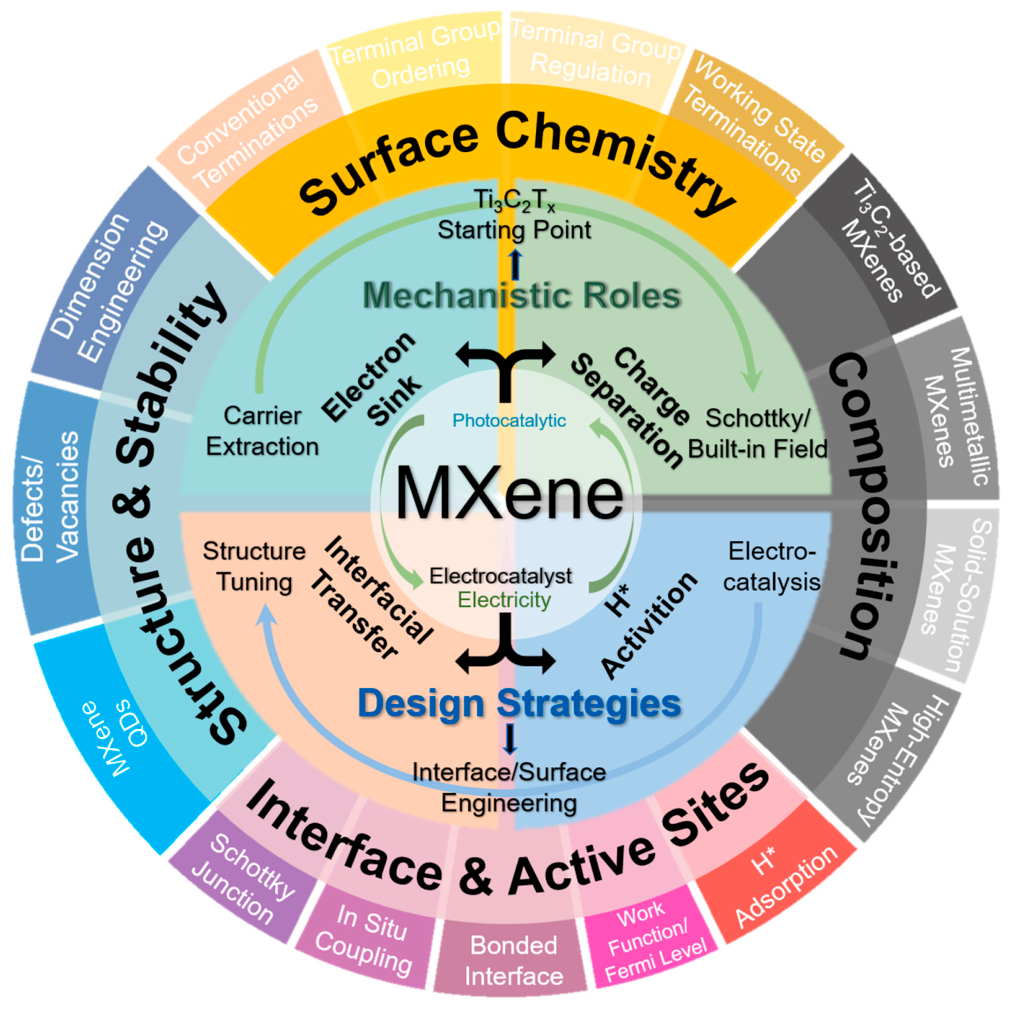
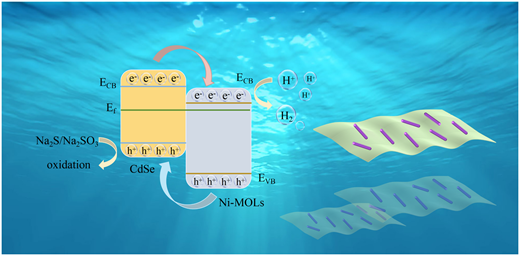
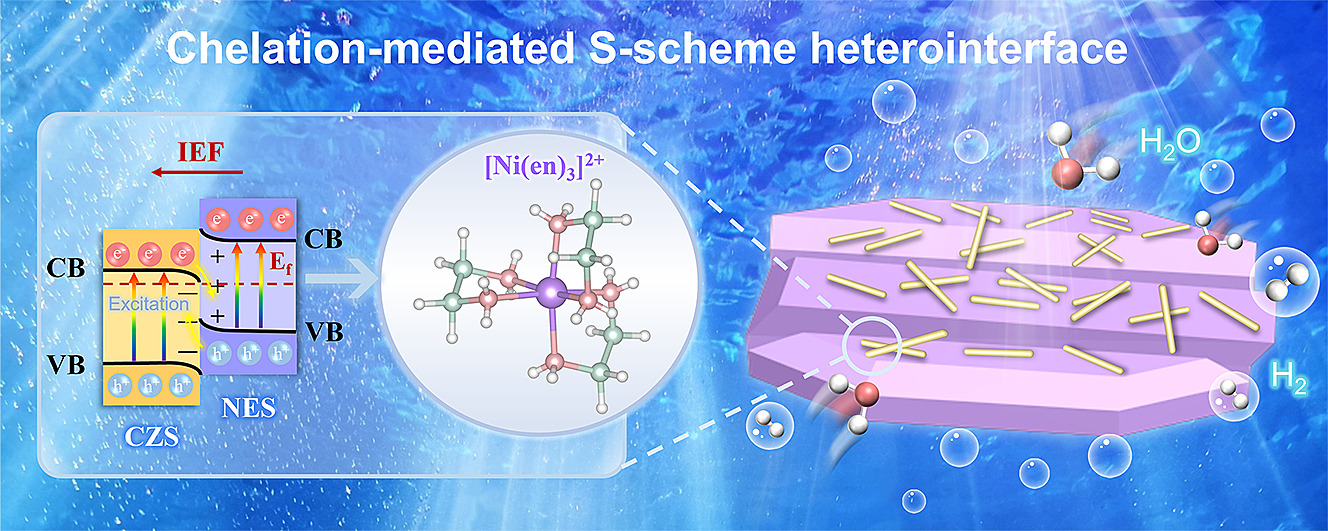
While MXenes are promising cocatalysts for photocatalytic hydrogen evolution, their roles are frequently oversimplified as merely conductive electron sinks. This review begins by revisiting the classical electron-sink mechanism of Ti3C2 and utilizes the CdSe/Ti3C2 and Cd0.5Zn0.5S/Ti3C2 systems to demonstrate how intimate interfaces, Fermi-level equilibration, Schottky junctions, and directional electron-transfer pathways synergistically couple charge separation with H* conversion. The discussion is then extended to multimetallic MXenes, using ZnIn2S4/Mo2TiC2 as a model, to highlight how metal-layer composition, local interfacial coordination, work-function differences, and hydrogen-adsorption energetics jointly regulate electron extraction and surface reaction kinetics. Special attention is given to surface terminations, which can reshape interfacial energetics and enable MXenes to transition between electron-sink and hole-mediated roles depending on the interface and working conditions. Furthermore, representative Nb2C quantum-dot and VNbC solid-solution systems illustrate how nanoscale electric fields and multimetallic sites can expand MXene functionality beyond conventional electron extraction. Ultimately, this role-oriented framework advances the development of MXene cocatalysts from simple material integration toward controllable and programmable interfacial functions.